


- Research
PICRC Provides Crucial Data to Guide Koror’s Southern Lagoon Coastal Fisheries Management Plan
Reef fish and other marine organisms are vital economic resources in Palau. Fishing provides the primary source of protein for the local population and remains a cornerstone of local culture. Recently, however, concerns have grown over the status of several targeted reef species, raising potential risks for both the local economy and the health of local ecosystems.
As the most populated state, Koror faces higher fishing pressure than other states. Several studies have found declines in fish biomass in Koror State’s waters, and local fishers have reported fewer and smaller catches of certain species. In response to these concerns, and in line with Palau’s tradition of sustainable management, the Koror State Government (KSG)—through the Resilient Reef Initiative (RRI)—developed a Sustainable Fisheries Management sub-project to provide the baseline data needed to implement the Koror Southern Lagoon Coastal Fisheries Management Plan (KSLCFMP). The plan, which is not yet in effect, introduces new marine protected areas and fishing regulations, including seasonal closures and minimum size limits for certain species.
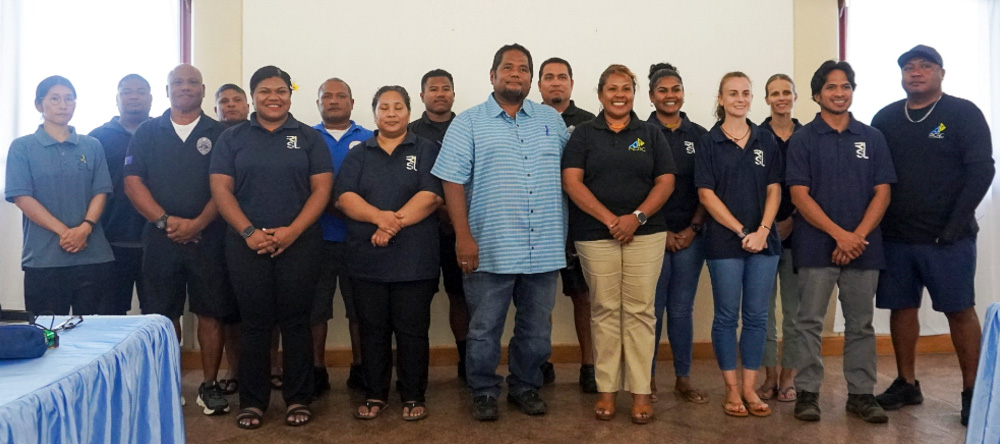
To support informed decision-making, the KSG commissioned the Palau International Coral Reef Center (PICRC) to conduct several studies assessing key aspects such as reef fish stocks, spawning aggregations of commercially important species, and the status of several fishery-relevant organisms in areas proposed for protection. Some of these studies involved Koror State Rangers, helping to build local capacity for future fisheries monitoring.
After sampling 90 sites in Koror State’s waters, one of these studies concluded that 76% were overfished, based on comparisons of their fish biomass with projected values for unfished reefs from a previous study in Palau. It also found that larger humpback red snappers (keremlal), a popular food species, may have been overfished, as most surveyed were below the size of maturity. These findings align with another study, which analyzed catch sizes at the JR5 Fish Market and concluded that populations of many popular species—such as groupers, emperors, and parrotfish—may be overexploited and therefore at risk.
Another study highlighted the importance of properly protecting the sites and timing of spawning aggregations of commercial fish species, such as the longnose emperor (melangmud), to allow their populations to recover. Finally, an assessment identified Btil a Uel, an area proposed for protection under the KSLCFMP, as appropriate for sea cucumber recovery, while Ngcheludel Kldeu was considered suitable for giant clam restoration. However, the absence of sea urchins in Butelchades—another area proposed for protection—was notable, as they are traditionally known to inhabit the area. The Koror State Rangers assisted in both the sea urchin and sea cucumber surveys, gaining valuable hands-on experience that will enable them to apply these methodologies independently in the future.
The report recommends taking the status of fish stocks and new information on maturation sizes into account in the management plan and emphasizes the importance of continuing to monitor the populations of key food species and those in protected areas.
These results were recently presented to the Koror State Government and the Koror State Legislature, in gatherings that proved informative and enriching for all attendees. The reports are also available in the Publications section of the PICRC website (picrc.org).