


- Education
PICRC Contributes to Palau’s World Tuna Day Celebration through Educational Activities and Sponsorship
On April 30, Palau celebrated World Tuna Day with an engaging event hosted by the Ministry of Agriculture, Fisheries, and the Environment (MAFE). The venue, the Bureau of Fisheries Compound in Ngemelachel, Koror, was filled with activities, food stalls, and competitions related to tuna and the important role these pelagic fish play in Palau’s food security.
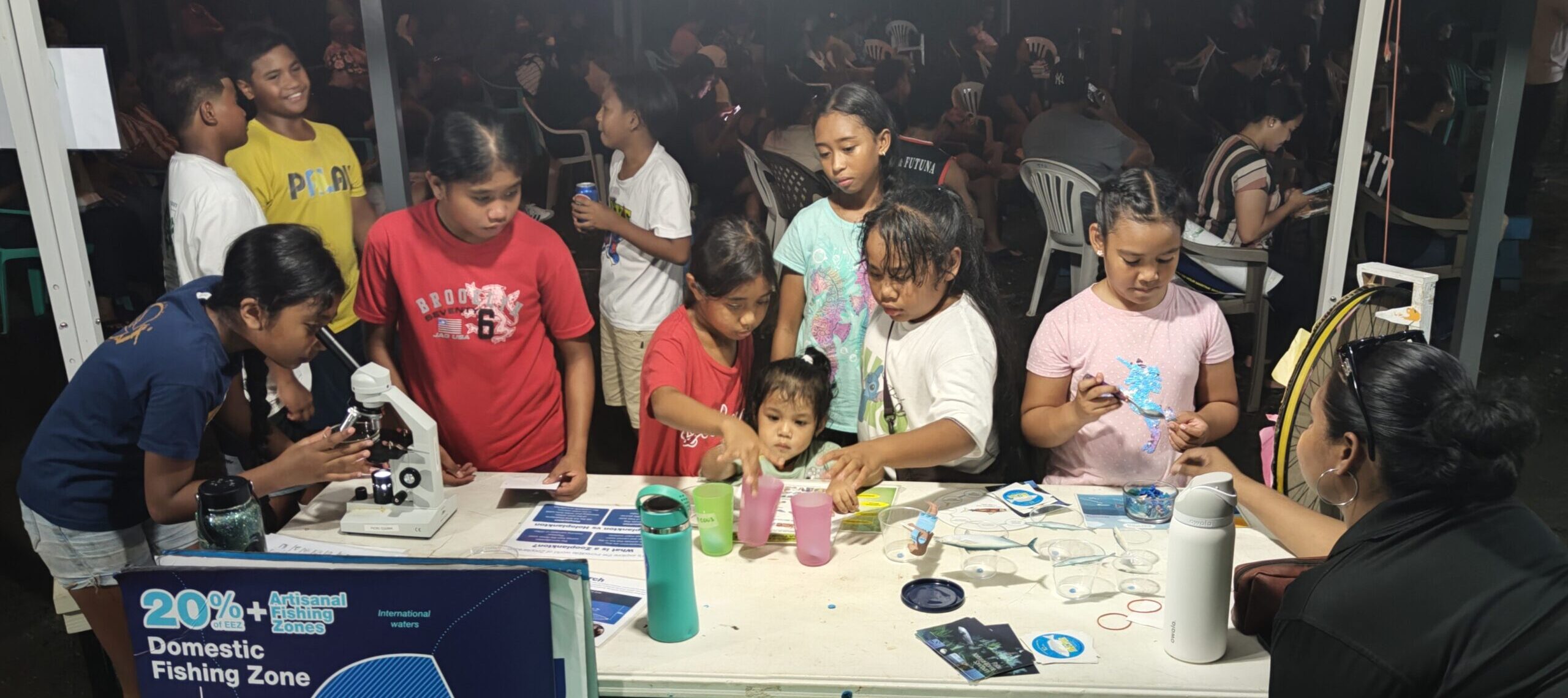
The Palau International Coral Reef Center (PICRC) contributed to the event with an educational booth designed to engage children and families in a variety of activities and games to learn about tuna, the Center’s tuna research projects, and the role of the Palau National Marine Sanctuary (PNMS) in protecting tuna fisheries. The Center also supported the celebration by sponsoring three prizes, with a total value of $500, for the cook-off competition held during the evening, and extended its sincere congratulations to the winners.
Visitors who stopped by the PICRC booth during World Tuna Day had the opportunity to observe plankton samples under a microscope and use identification guides to learn about the different organisms they encountered. As the foundation of open-ocean food webs, plankton is essential for the development of tuna. In addition, one of PICRC’s tuna-related research projects focuses on plankton studies, collecting samples of these mostly microscopic organisms that drift through the water column to investigate the presence of tuna larvae and better understand their development and distribution in Palauan waters. PICRC also collaborates with local pelagic fishing organizations, Belau Offshore Fishers Incorporated (BOFI) and the Palau Commercial Fishing Company (PCFC), to collect and analyze gonad (reproductive organ) samples from harvested tuna, with the aim of studying the reproduction of different tuna species found in Palauan waters.
The PICRC team also explained to visitors the risks of plastic bioaccumulation in marine food webs. Through an interactive game, participants learned how marine organisms can ingest tiny plastic fragments—microplastics and nanoplastics—present in the ocean, allowing them to move up the food chain and accumulate at higher trophic levels, including tuna and humans. The activity concluded by introducing solutions to this issue through a waste segregation game that emphasized the importance of reducing plastic use, recycling, and keeping the ocean free of debris to protect both marine ecosystems and human health.
Finally, participants learned about the importance of the PNMS in protecting the tuna life cycle, along with many other species of fisheries, ecological, and tourism importance, and had the opportunity to win prizes by spinning a wheel and correctly answering questions about tuna in Palau.
Through initiatives like these, PICRC remains committed to supporting community events and promoting scientific learning, environmental awareness, and the sustainable management of Palau’s marine resources.