


- Research
New study examines biology of longnose emperor in Palau
The Palau International Coral Reef Center (PICRC) has published a new study on the biology of the longnose emperor (Lethrinus olivaceus; melangmud) in the scientific journal PeerJ. The full paper can be found here: https://doi.org/10.7717/peerj.21247.
The study helps scientists better understand how this important reef fish grows, ages, and reproduces in Palau’s waters. Information like this can be used together with length data to help determine whether fish populations are healthy and being harvested sustainably, which is important for informing fisheries management.
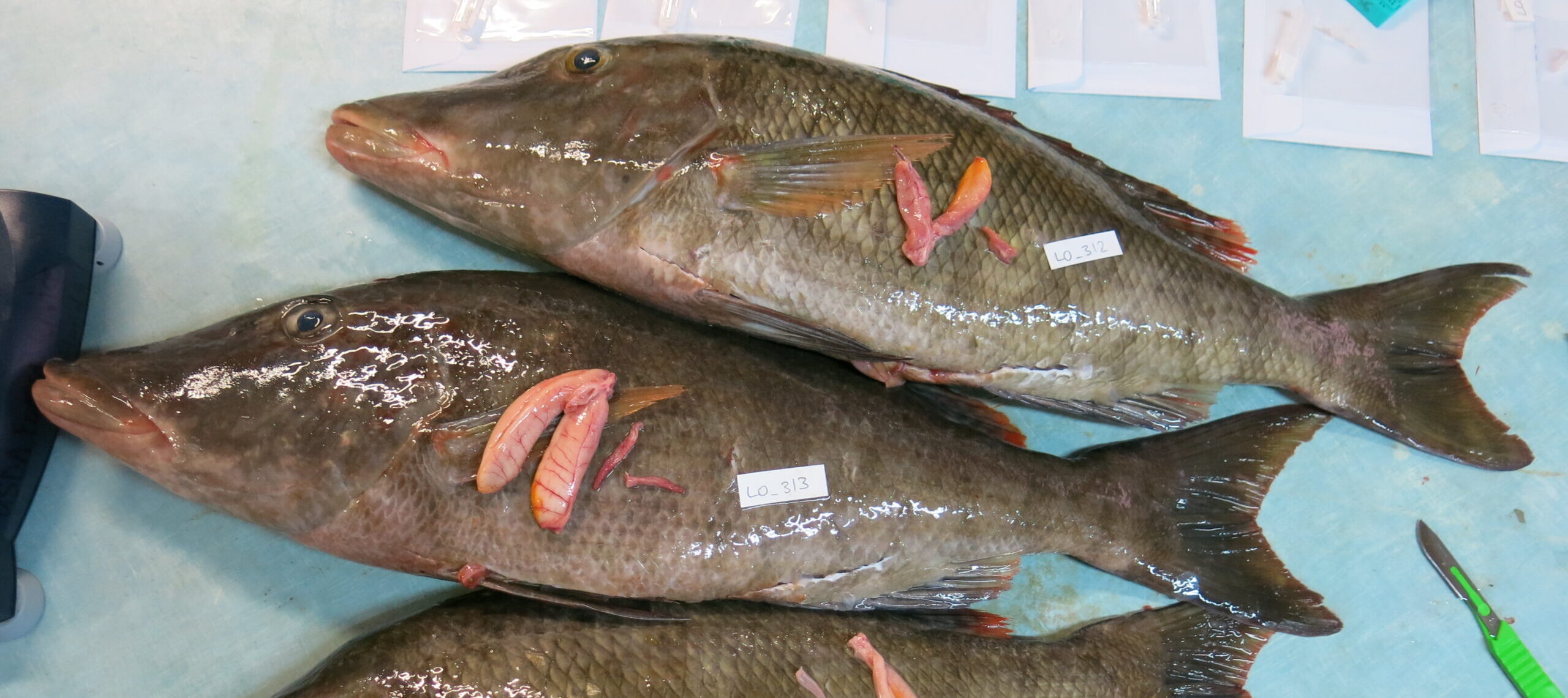
To carry out the study, researchers collected samples from 399 longnose emperors between 2022 and 2025, along with data from another 129 fish collected by the Coral Reef Research Foundation (CRRF) between 2017 and 2019. Scientists examined otoliths, or “ear bones,” which can be used like tree rings to estimate the age and growth of fish. Researchers also studied gonads, which are the reproductive organs that produce eggs or sperm, to determine when fish reach maturity and how they reproduce.
The results showed that longnose emperors in Palau grow faster, do not live as long, and reach smaller maximum sizes than populations found in cooler waters at higher latitudes such as Japan, Australia, and French Polynesia. Researchers also found that males were generally larger and older than females, with evidence suggesting that some fish may change sex as they age.
Although this study does not directly assess the current health or sustainability of the species, it provides updated life-history information — including growth, age, and reproductive characteristics — that can improve future stock assessments and fisheries management decisions. A previous assessment using available life-history data from multiple sources found this species to be vulnerable; however, the updated parameters from this study have not yet been incorporated into a new assessment.
PICRC is also expanding this research to other important reef fish species in collaboration with The Nature Conservancy (TNC) and CRRF. By building a broader understanding of reef fish biology in Palau, these efforts will help fill important knowledge gaps and provide valuable information for future fisheries research and management.