


- Event
- Research
PICRC and Stanford University Host Community Meetings in Babeldaob
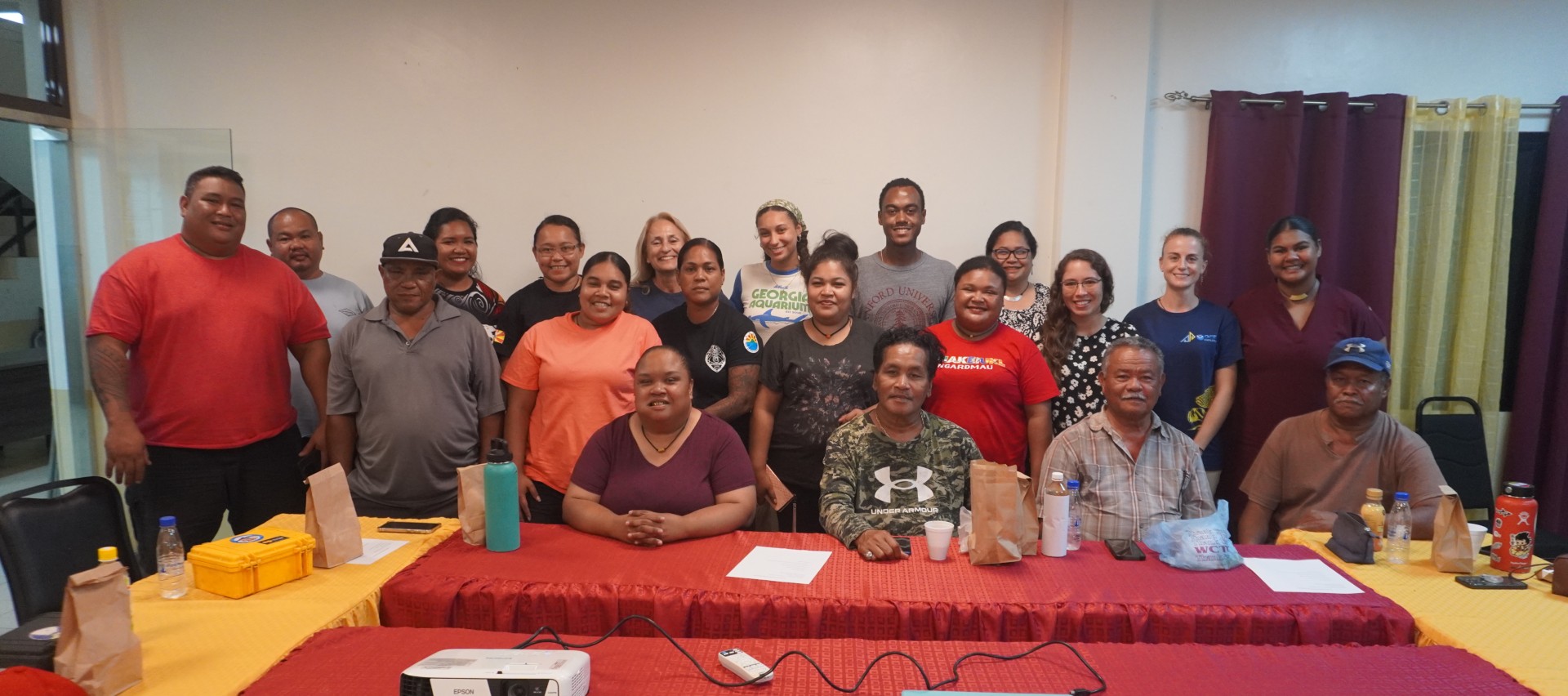
Between December 4 and December 11, the Palau International Coral Reef Center (PICRC), in collaboration with visiting researchers from Stanford University, conducted four community meetings in the states of Airai, Ngatpang, Ngiwal, and Ngardmau. The meetings aimed to share preliminary results from seagrass surveys carried out in these states since 2023 and to engage communities in discussions about the health and future of their coastal ecosystems.
Stanford University PhD candidates Ceyenna Tillman and Joy Kumagai have been conducting research in Palau over the past three years, focusing on six states: Airai, Ngatpang, Ngardmau, Ngaraard, Ngiwal, and Peleliu. Their research, carried out in collaboration with PICRC, examines seagrass diversity, threats to seagrass ecosystems—such as disease—and the fish communities that depend on these habitats. The work builds on several years of PICRC surveys in Palau’s Marine Protected Areas (MPAs) to understand change over time in these ecosystems. Alongside Stanford PhD candidate Ryan Rogers and their supervisor, Dr. Fiorenza Micheli, Ceyenna and Joy returned to Palau in late November to collect additional data and share their findings with local communities.
Attendance at the community meetings ranged from 11 to 23 participants per state. Following presentations tailored to each community, the meetings were opened for questions and discussion. Participants expressed strong interest in the research, with several attendees asking how community members—particularly local students—could become involved and learn how to protect seagrass habitats.
The meetings also created space for community members to share their own observations of changes in seagrass beds and other environmental conditions over time. In several states, the Protected Area Network (PAN) officers, rangers, and high chiefs contributed valuable local knowledge, enriching the dialogue between scientists and communities.
In Ngiwal, in addition to the Stanford presentation, PICRC was requested by the Ngiwal legislature to share the findings from the most recent PICRC report on the local MPA, Ngemai Conservation Area. The survey, conducted in 2022, indicated coral cover was stable in the fore reef, however a large decrease in seagrass cover was observed in the reef flat since 2015. Changes in seagrass cover and sandy areas have been observed at this site over the last 75 years, likely caused by storm events such as Typhoon Bopha in 2012. These changes can affect fish and invertebrates, such as sea cucumbers and sea urchin, which rely on the seagrass habitat, explaining their decrease over time. Invertebrate densities were also very low in the fore reef habitat. PICRC Researcher Christina Muller Karanassos presented these findings and shared recommendations on how to improve the effectiveness of the MPA, including through coral and/or seagrass restoration, increasing the size of the MPA, and restocking the area with commercially-important invertebrates.
PICRC extends its thanks to Stanford University and the states of Airai, Ngatpang, Ngardmau, and Ngiwal for their collaboration, participation, and leadership in hosting these meetings. Community engagements are an important step in all PICRC research activities, ensuring that scientific findings are shared transparently, local knowledge is respected and incorporated, and communities remain actively engaged in the stewardship and protection of Palau’s marine and coastal ecosystems.