


- Event
PICRC Hosts Regional Workshop to Advance Coral Reef Restoration, Capacity Building, and Community Engagement
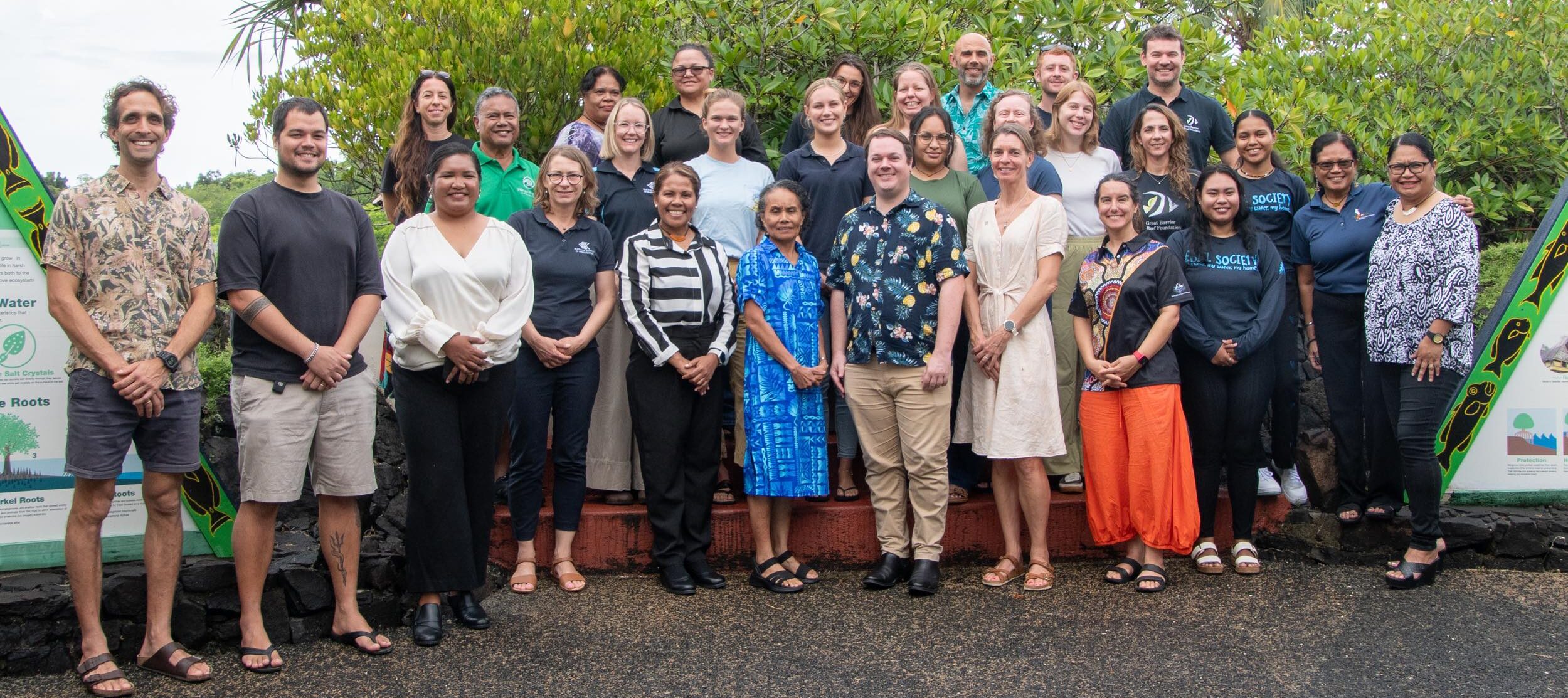
The Palau International Coral Reef Research Center (PICRC), in collaboration with its long-standing partner, the Great Barrier Reef Foundation, recently hosted a week-long coral reef restoration planning workshop from May 25–30, 2026. This workshop brought together local and international partners, government representatives, technical experts, and conservation practitioners to strengthen Palau’s capacity for coral reef restoration and resilience.
It provided an important forum for participants to discuss long-term strategies for coral reef conservation, restoration science, community engagement, workforce development, and regional collaboration. Through a series of presentations, facilitated discussions, and technical working group sessions, participants worked together to identify priorities and develop a shared framework for advancing restoration efforts in Palau over the coming years.
Opening remarks were delivered by PICRC Chief Executive Officer Roxanne Siual Blesam, alongside representatives from key partner organizations and stakeholders, highlighting the importance of collaborative action to safeguard Palau’s coral reef ecosystems in the face of increasing environmental pressures. His Excellency Toby Sharpe, Australia Ambassador Extraordinary and Plenipotentiary to Palau provided key, stressing how coral reefs are not only extraordinary ecosystems, they are also the foundation of food security, livelihoods, culture, tourism, and resilience for the Pacific.
A central theme throughout the workshop was the importance of local ownership and leadership. Participants emphasized the need to invest in Palauan expertise, strengthen partnerships across sectors, and ensure that communities remain actively involved in shaping future conservation initiatives.
The workshop also highlighted Palau’s growing role as a center for coral reef science and conservation in Micronesia. Participants discussed opportunities to expand regional collaboration through training programs, technical exchanges, and knowledge-sharing initiatives that can support restoration efforts across the broader Pacific region.
Several local stakeholders shared positive reflections on the workshop, noting the value of bringing together diverse perspectives to discuss shared conservation goals. One example was from Ms. Toni Kemel Soalablai, Office of Climate Change, who stated, “I was excited by the vision of Palau becoming a training and knowledge hub for Micronesia. A locally-led and co-designed approach that supports local actors while sharing knowledge across the region has the potential to strengthen resilience well beyond Palau. Overall, I left the workshop feeling encouraged. The work is ambitious, but it does value partnership, local leadership, and the idea that building resilience starts long before a crisis arrives.”
“The discussions demonstrated the depth of expertise and commitment that exists within Palau and among our partners,” said Ms. Blesam. “By working together, we can strengthen our collective capacity to protect and restore coral reef ecosystems while supporting future generations of conservation leaders.”
The workshop concluded with a commitment to continue refining implementation plans, strengthening stakeholder engagement, and advancing the partnerships necessary to support long-term coral reef resilience in Palau.