


- Sponsors
PICRC Invites Major Donors to Visit Its Marine Research Sites
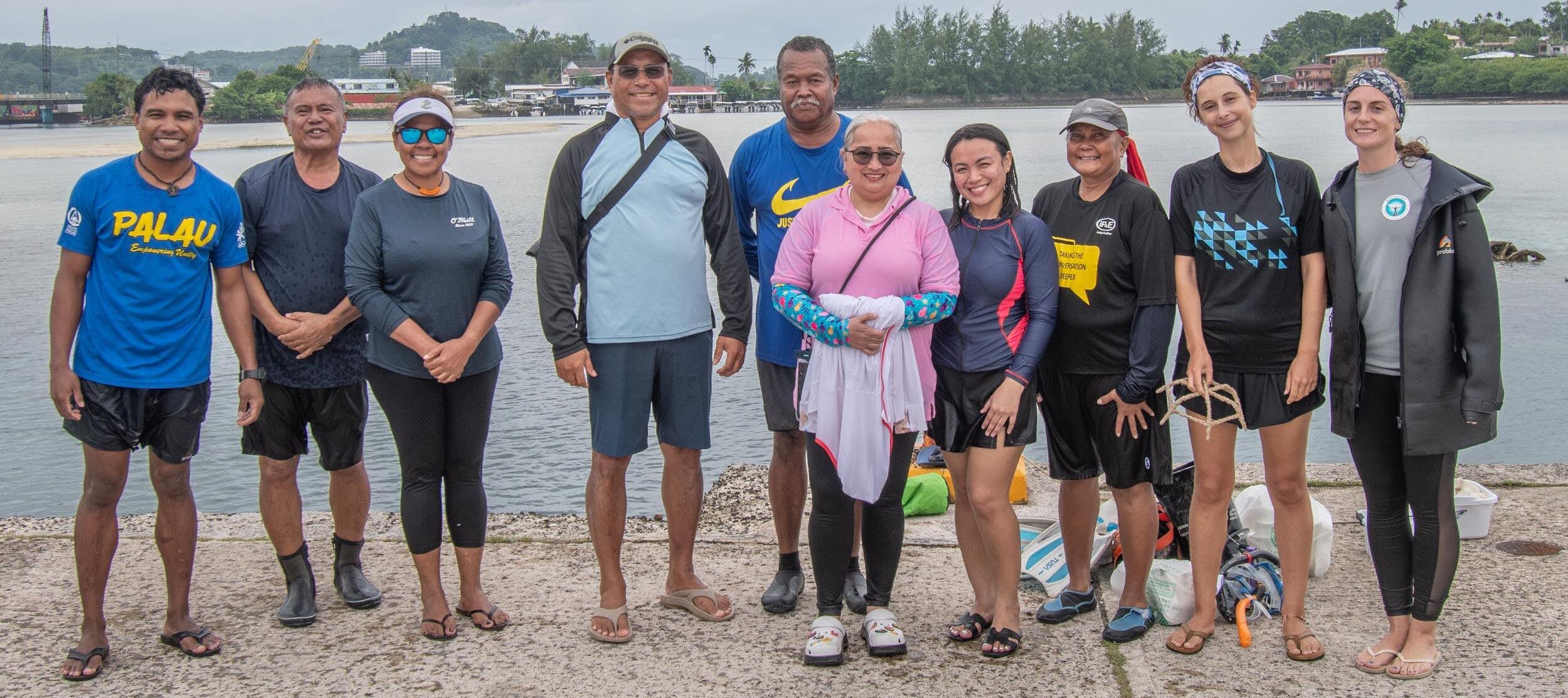
The Palau International Coral Reef Center (PICRC) relies on the continued support of its partners and donors to advance scientific research, conservation, and public awareness of Palau’s marine ecosystems. In appreciation of their valuable contributions and to provide a closer look at the impact of their support, the Center recently hosted a snorkeling tour where guests visited some of PICRC’s research and restoration sites and learned more about the Center’s ongoing work.
Representatives from the Senate (Olbiil Era Kelulau), Palau Pacific Resort (PPR), Palau Royal Resort (PRR), and Island Petroleum & Energy (IP&E) joined members of PICRC’s Research and Outreach teams, along with Chief Executive Officer Roxanne Siual Blesam, for a day of learning, enjoyment, and meaningful engagement with Palau’s marine environment.
Following a welcome at the Center, the group began the boat tour, heading to one of PICRC’s coral restoration sites in Ngaraard State. There, Asap Bukurrou introduced the different techniques currently being implemented by the Center to help rehabilitate degraded reefs. Guests then entered the water to observe one of these techniques firsthand: Reef Stars, artificial reef structures that provide a stable framework to which coral fragments are attached. The PICRC team explained how these structures are installed and monitored at several restoration sites across Palau, allowing corals to grow and contribute to the recovery of degraded reefs.
“It’s rewarding to see how these patch reefs, once damaged by past typhoons, are now recovering through PICRC’s coral restoration efforts. It was especially encouraging to observe the diversity and abundance of fish already using these areas, feeding among corals that have continued to grow since they were outplanted in July last year,” said Senator Secilil Eldebechel, Chairman of the Senate Committee on Tourism, Environment, Maritime and Climate Change of the 12th Olbiil Era Kelulau, who joined the snorkeling tour.
After exploring the area and engaging with the team about ongoing coral restoration efforts, the group enjoyed the scenic views as they continued by boat toward Ngerumekaol, Koror, one of the 29 Marine Protected Areas (MPAs) within Palau’s Protected Areas Network (PAN). Located in and around Ulong Channel, the site is recognized as an important spawning and breeding area for several grouper species.
Over lunch, PICRC researcher Dr. Piera Biondi shared an overview of the Center’s long-term monitoring program within Palau’s PAN-MPAs. She explained how the team collects data on marine ecosystems and organisms, with a particular focus on commercially important species and corals, through fieldwork conducted both within MPAs and at reference sites outside protected areas. Comparing data from protected and reference sites allows researchers to evaluate the effectiveness of MPAs in conserving marine life.
The excursion concluded with a visit to one of PICRC’s coral nurseries, where scientists maintain colonies of the coral species Acropora digitifera as part of ongoing research on heat-tolerant corals in collaboration with the Coralassist Lab at Newcastle University. Guests had the opportunity to observe multiple generations of corals produced from parent colonies that showed increased tolerance to elevated temperatures. During the visit, the PICRC team explained how this project aims to better understand whether heat tolerance can be retained across generations, providing valuable insights for the development of climate-smart coral restoration strategies in Palau.
“We are deeply grateful to our donors and sponsors for their continued partnership with PICRC. Inviting them to see our work firsthand is our way of showcasing the science and conservation achievements their support makes possible,” said PICRC Chief Executive Officer Roxanne Siual Blesam.
Building on the success of the tour, PICRC is committed to making site visits an ongoing part of its engagement with valued donors and partners, strengthening these relationships through a shared understanding of the Center’s work and the opportunity to see firsthand the impact their support is making in conserving and sustainably managing Palau’s coral reef ecosystems and marine resources.