

Coral Restoration
Coral reefs are the lifeblood of the Pacific Islands, sustaining marine biodiversity, food security, local economies, and cultural heritage. PICRC’s coral restoration program, launched in 2022, is a growing and proactive effort to help Palau’s reefs build resilience against the increasing impacts of climate change and other stressors. We aim to expand these efforts across the country, engage more communities, and scale up training programs that build national expertise in reef restoration.
What is Coral restoration ?
Coral restoration is the process of helping damaged reefs recover by growing and replanting corals in areas where reefs have declined.
Techniques
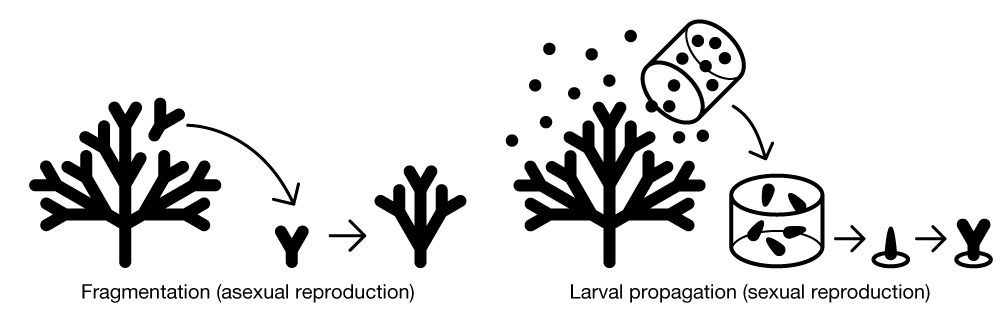
Corals can reproduce asexually and sexually: therefore, coral restoration is generally divided into two main categories: fragmentation and sexual larval propagation.
Process
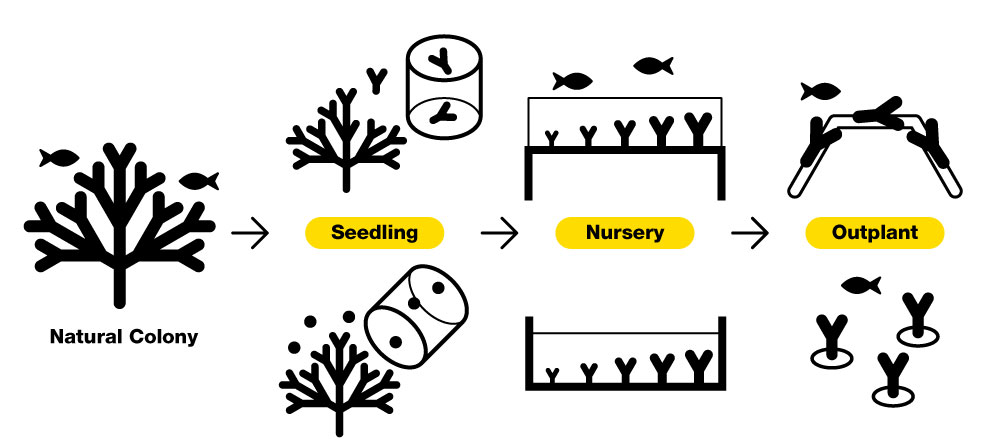
The coral restoration process can be broadly divided into the following phases, each employing different methods. Coral survival and acclimatization are monitored to improve restoration techniques.
Our Projects
Heat testing
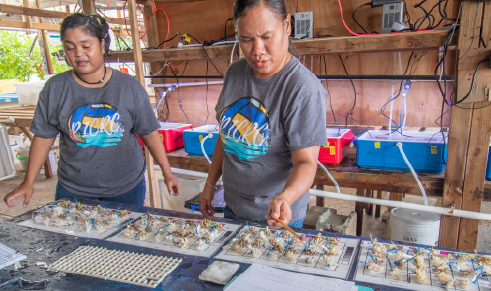
Rising ocean temperatures can lead to coral bleaching; however, some coral colonies are able to survive under high-temperature conditions. Researchers identify heat-resilient coral colonies and grow selected fragments in our nursery.
Larval propagation
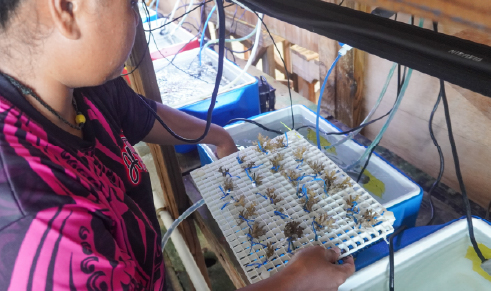
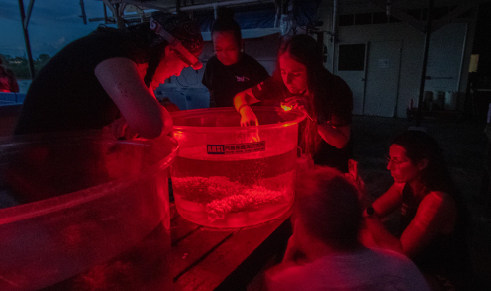
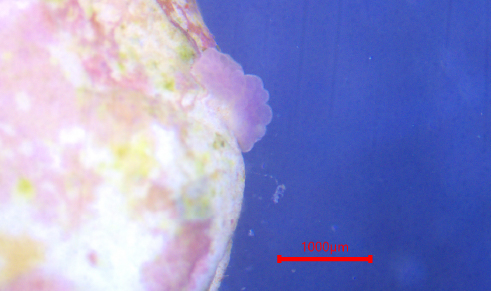
From April to May, corals in Palau spawn around the full moon. Researchers collect eggs and sperm from broodstock that have been selected for specific traits (i.e., heath tolerance, fluorescence or others) fertilize them, and rear the larvae on coral settlement devices. After several months, the juvenile corals are outplanted onto the reef.
Coral planting
We use three different methods to outplant corals:
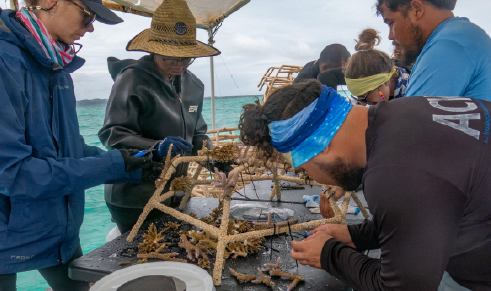
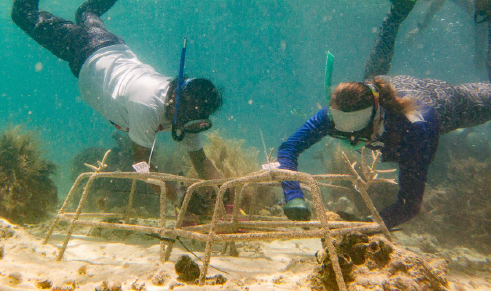
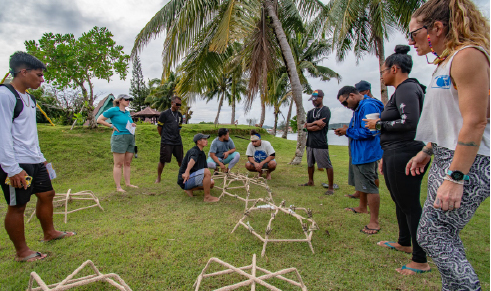
Reef Stars are star-shaped metal frames placed on the ocean floor. Coral fragments are attached to them and grow over time. This method is particularly suited for reefs that have lost structural complexity after significant disturbances, like cyclones, as it provides essential habitat for fish in marine environments characterized by sand or unstable rubble.
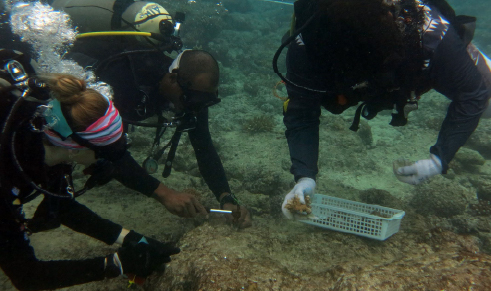
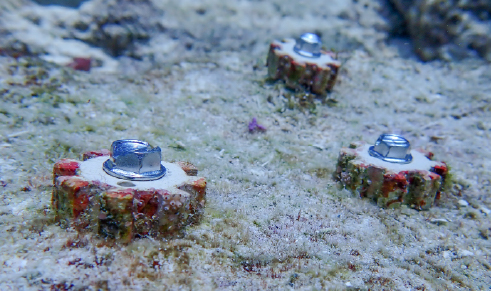
Coralclip® devices are used to attach coral fragments directly to natural reef surfaces. This method is more indicated in site with hard substrata.
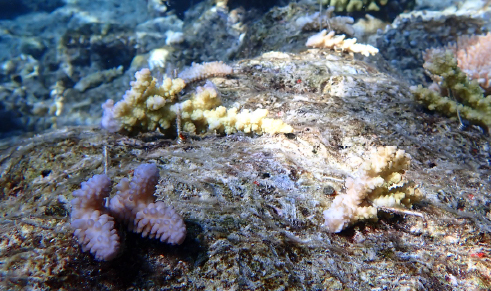
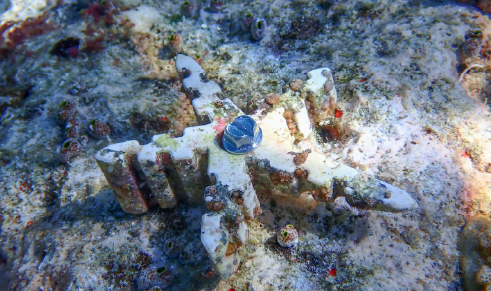
Coral Settlement Devices are specially designed devices that scientists use to settle coral larvae. These devices normally have groves or shapes that protect baby corals from predation, improving the overall survival. This method is particularly indicated in site with hard substrata and shrank population as it increases the genetic diversity.
Community engagement
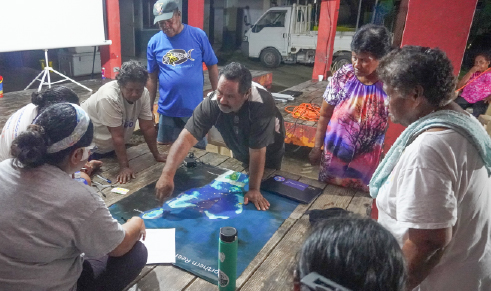
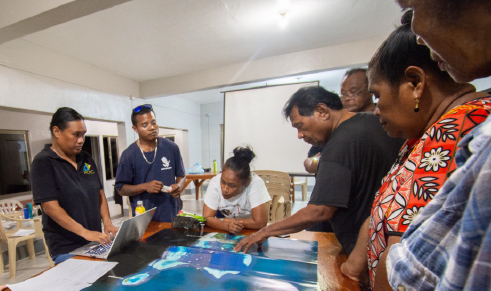
We facilitate community discussions to co-design reef restoration and monitoring plans, blending science with traditional knowledge for smarter, site-specific restoration. We also engage youth, community members, and local leaders in hands-on reef restoration and stewardship activities.
Guiding coral restoration in Palau
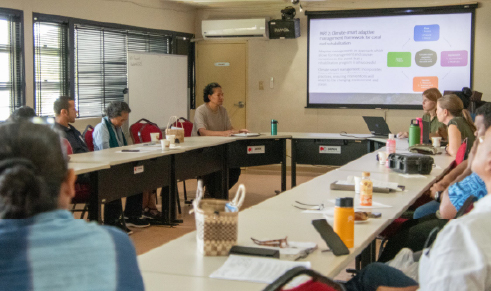
We are developing a Climate-Smart Adaptive Management Framework for Coral Restoration and a guideline for reef practitioners on how to include coral adaptation into coral restoration. This project aims to guide the management and preparation of Palau’s reefs for future climate stress.
Collaboration
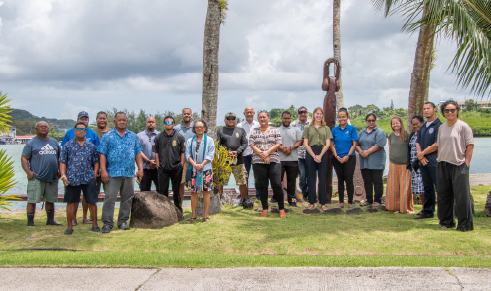
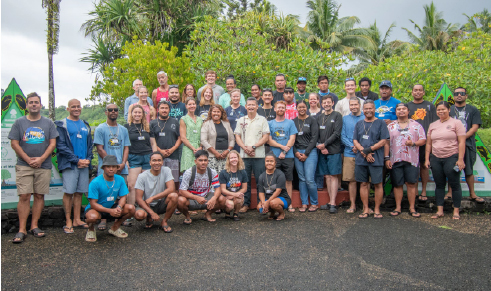
We work with international experts and conservation partners across the world to promote peer learning and knowledge exchange among island communities.
Collaborators
Newcastle University
Stanford University
University of Queensland
Conservation Society of Pohnpei
Marshall Islands Conservation Society
Coral Nurture Program
Great Barrier Reef Foundation
MARS Sustainable Solutions
SECORE International
The Horniman Museum and Gardens in London
The Nature Conservancy, Micronesia and Polynesia